Web Development
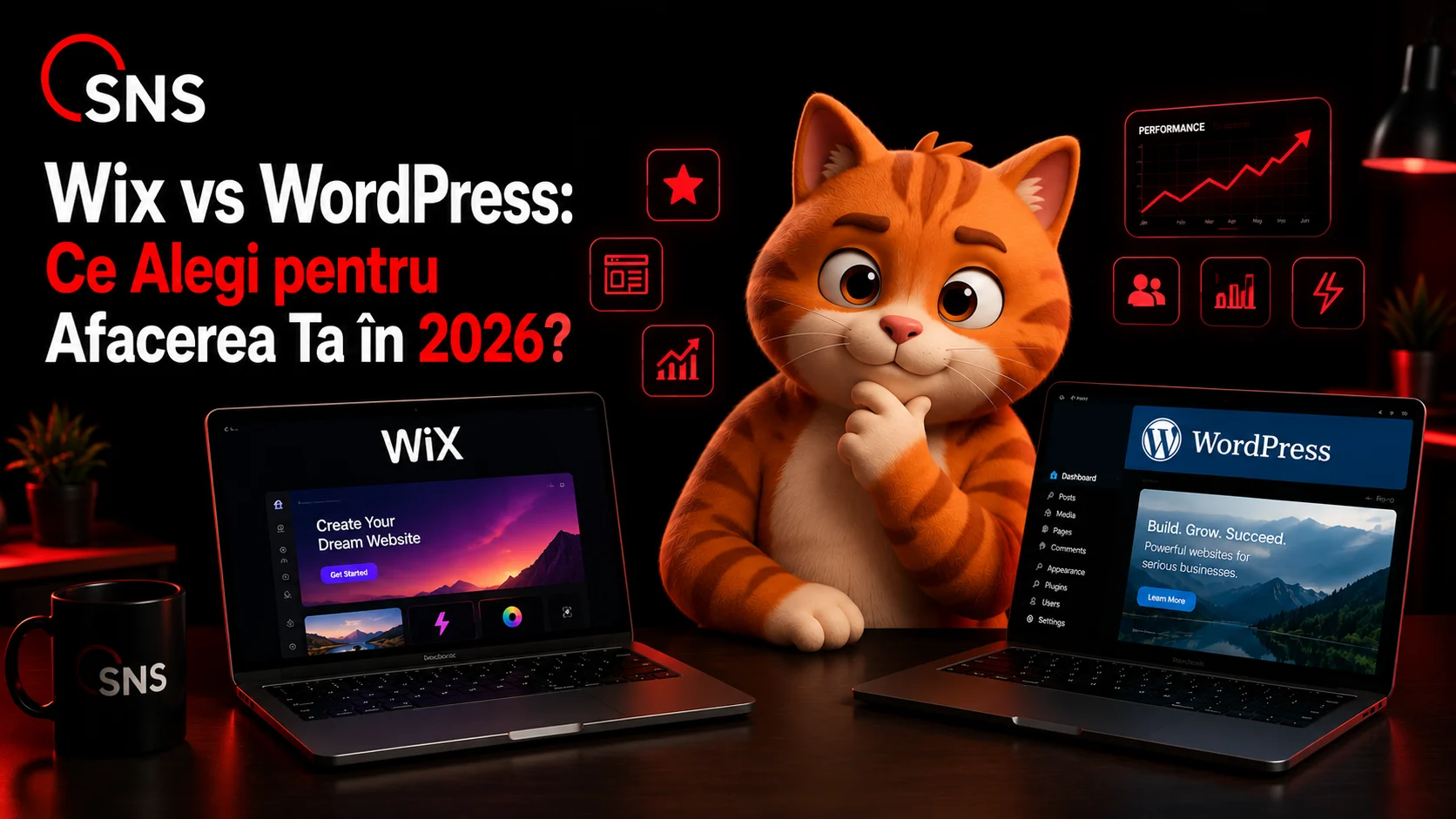
Wix or WordPress? We compare price, ease of use, SEO, and scalability so you know exactly which platform makes sense for your business, not for an influencer's portfolio.
It's the kind of question that sounds simple until you start searching on Google and find 40 articles that contradict each other. Some say Wix is "for amateurs," others say WordPress is "too complicated." The truth is much less dramatic: they're two different tools, built for different people, and choosing the wrong one costs you time and money, not because the platform is bad, but because it wasn't built for what you want to use it for.
Let's cut through the noise.
Wix is an all-in-one website builder. You sign up, choose a template, drag and drop elements onto the page, pay a monthly subscription, and that's it, your site is live. Hosting, security, and updates are all included automatically, you don't have to deal with any of the technical side.
Wix plans in 2026 start at $17 per month (Light, no online store), go up to $29 (Core, with ecommerce enabled), $39 (Business), and $159 per month for Business Elite, all with annual billing. There's also a free plan, but it comes with Wix ads and a domain like yourname.wixsite.com, which doesn't look professional at all for a business.
Who it makes sense for: small businesses just starting out, freelancers, people who want a functional website quickly and don't have the budget or patience for custom development.
WordPress is something completely different. It's not a service, it's open-source software that you install on hosting of your choice. It runs close to 40% of all websites on the internet, which says something about how flexible it is: it can be a blog, a presentation website, an online store with WooCommerce, or almost any other structure you can think of.
The big difference from Wix: you don't pay a fixed subscription to a single company. You pay for hosting separately (from a few euros a month), possibly a premium theme, plugins, and, most often, a developer to put it all together and maintain it. WordPress itself is free, but "free" doesn't mean "without cost."
Who it makes sense for: businesses that want real control over their website, that expect to grow and need custom functionality, or that want a serious online store through WooCommerce.
| Criterion | Wix | WordPress |
|---|---|---|
| Monthly cost | $17-159 (all-inclusive) | Variable: hosting + theme + plugins + maintenance |
| Ease of use | Very easy, drag & drop | Learning curve, especially during initial setup |
| Flexibility | Limited to what Wix offers | Practically unlimited (60,000+ plugins) |
| Ecommerce | Wix Stores, good for small-to-medium stores | WooCommerce, the industry standard for serious stores |
| SEO | Basic tools included | Full control through plugins (Yoast, RankMath) |
| Scalability | Limited by the chosen plan | Grows along with the business, no artificial ceiling |
| Ownership | The site stays "locked in" on the Wix platform | You have full control, you can move hosting anytime |
| Maintenance | Zero, automatic | Requires regular updates (or a maintenance contract) |
This is where the difference matters most. Wix Store is fine for a small store, with a few dozen products, where you want simplicity and aren't interested in complex integrations. WooCommerce clearly wins when we're talking about large catalogs, integrations with Romanian invoicing and accounting systems, or advanced marketing strategies and automations. If your plan is "we're selling 200 products now, but we want 2,000 in two years," you start directly with WordPress, so you don't have to migrate everything halfway through.
Both platforms can be properly optimized for SEO, let's be honest about that. The difference isn't "one does SEO, the other doesn't," it's how much control you have. On WordPress, with a plugin like RankMath or Yoast, you control every technical detail: URL structure, schema markup, load speed through advanced caching optimizations. On Wix, you have basic SEO tools, enough for a simple presentation website, but limited when you want to make fine technical optimizations or compete seriously for competitive keywords.
If SEO is a real priority for your business (meaning you want to appear organically on Google, not just have a site that exists), WordPress gives you much more room to maneuver.
Ironically, WordPress started out as a blogging platform and remains the strongest option for it. Categories, tags, post scheduling, comments, they're all native and mature. Wix also has a blog module, functional and good enough for occasional posts, but if your plan is to publish consistently and build authority through content, WordPress remains the standard.
Forget about "which platform is better" and ask yourself where your business will be in two years.
Choose Wix if: you're just starting out, you want a functional site quickly, your monthly budget matters more than flexibility, and you don't need unusual functionality.
Choose WordPress if: you want a serious online store, you need integrations specific to the Romanian market (invoicing, couriers, payments), you plan to invest consistently in SEO and content, or you simply want the site to be yours, not "rented" from a platform.
There's no universally correct answer, there's the right answer for your specific business. If you want to discuss which option makes sense for your business and how much implementation would realistically cost, let's talk, no pressure and no inflated numbers.