
Web dev & SMM
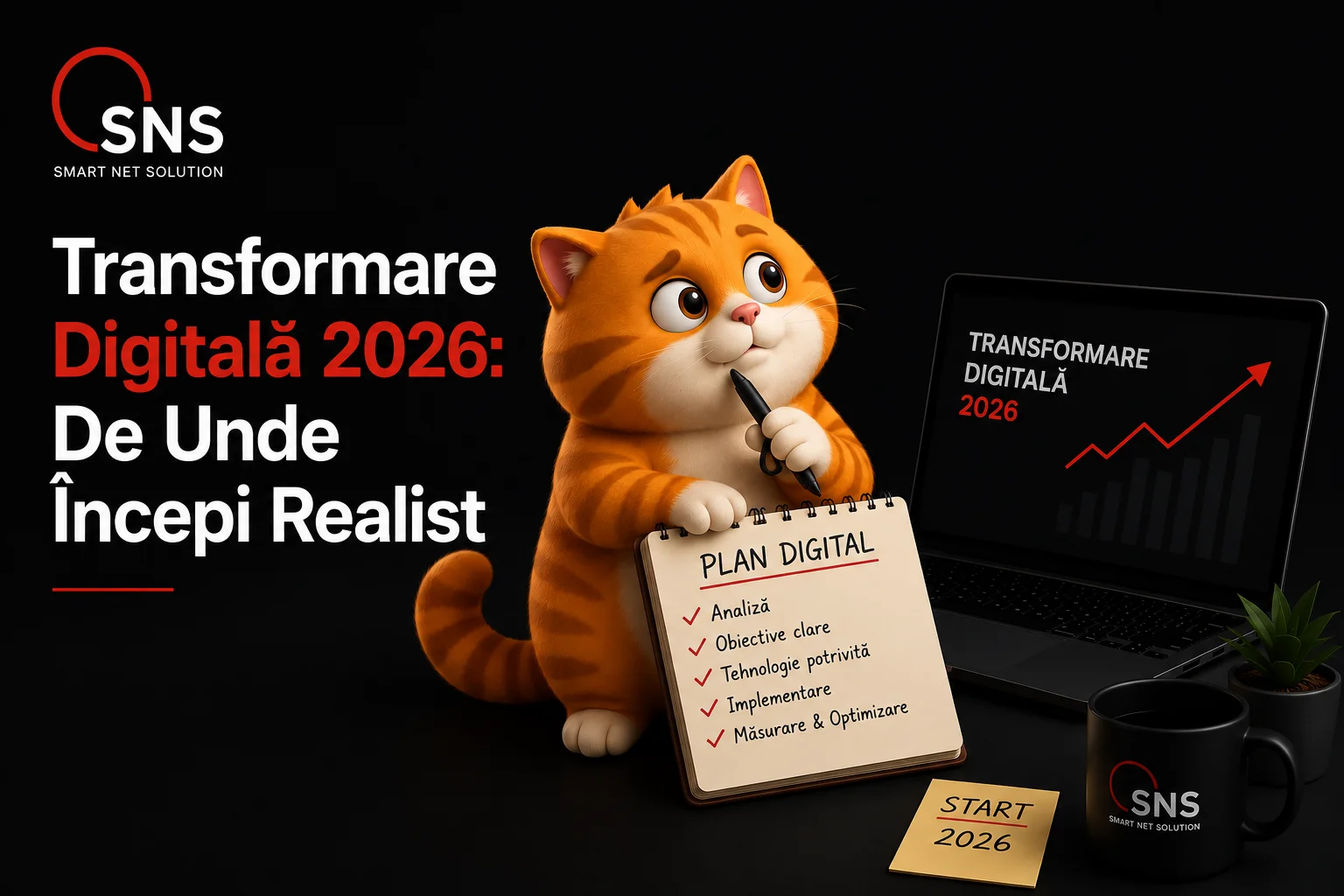
Want a digital transformation for your business but don't know where to start? Here are the concrete steps, without complicated jargon, that you can take in 2026.
"Digital transformation" sounds big and expensive. In practice, for a small business in Târgoviște, it means something very simple: not losing time and customers because of things that could be done automatically. You don't need to change everything at once, and you don't need to be a computer expert. You just need to start with the right step, in the right order.
Many entrepreneurs put it off for years because it seems too complicated or too expensive. Meanwhile, the competitors who did take the step are taking their customers. The truth is that it doesn't cost as much as you think, and it brings much more than it seems at first glance. Let's see exactly where to start in 2026.
Before you buy any software or app, ask yourself a few honest questions about your business:
The answers to these questions tell you where to start, not what's trendy.
Don't digitize for technology's own sake. Set clear targets, with numbers and deadlines:
You don't need everything. You need whatever solves your specific problem. Here are a few commonly used tools, by area:
| Area | Commonly Used Tools |
|---|---|
| Marketing | Google Ads, Meta Business Suite, email marketing |
| Operations | invoicing software, inventory management, automations |
| Communication | WhatsApp Business, Microsoft Teams, Zoom |
The best software is useless if your people don't know how to use it or are afraid of it. Talk to your team, explain why you're changing something and what they specifically gain from it. An employee who understands why they're doing something does it much better than one who just has a new app dropped on them.
You don't need long, expensive courses. Most of the time, an hour of clear explanations and a few practical examples is enough. People are only scared of new things until they've used them two or three times. After that, they don't even want to hear about how they used to work.
Digital transformation never really ends. Every few months, take a look: what worked, what didn't, what else you can simplify. See how many orders come in online, how much time you've saved, what questions you get most often from customers. These numbers show you what to improve next. It's an ongoing process, but not a hard one once you've found your rhythm.
A common mistake is starting with whatever sounds spectacular: an AI chatbot, complicated automations, integrations between five different programs. It sounds modern, but if you don't have the foundation, you're building on sand. The logical order is almost always the same:
Don't skip steps. Each stage prepares the next one. A business that starts with advanced integrations without a solid website often ends up paying twice: once for rushing at the start, and again to fix it.
You don't need a big budget to start. You need a well-thought-out budget. The costly mistake is buying ten software subscriptions right from the start that you never actually get around to using. The sound approach is different:
Digitization isn't an expense you make once and you're done. It's a process where each successful step funds the next one. Go slowly, but go steadily.
A good digital transformation starts with an honest look at your business and ends with a company that works more easily, not harder. You don't need a corporate budget, you need direction.
Also read our guide on the reasons why your website isn't showing up on Google.
If you'd like someone to help you see clearly where to start, without loading you up with jargon nobody understands, write to us on our contact page. We'll look at your business together and tell you honestly what's worth doing first.