AI & SEO
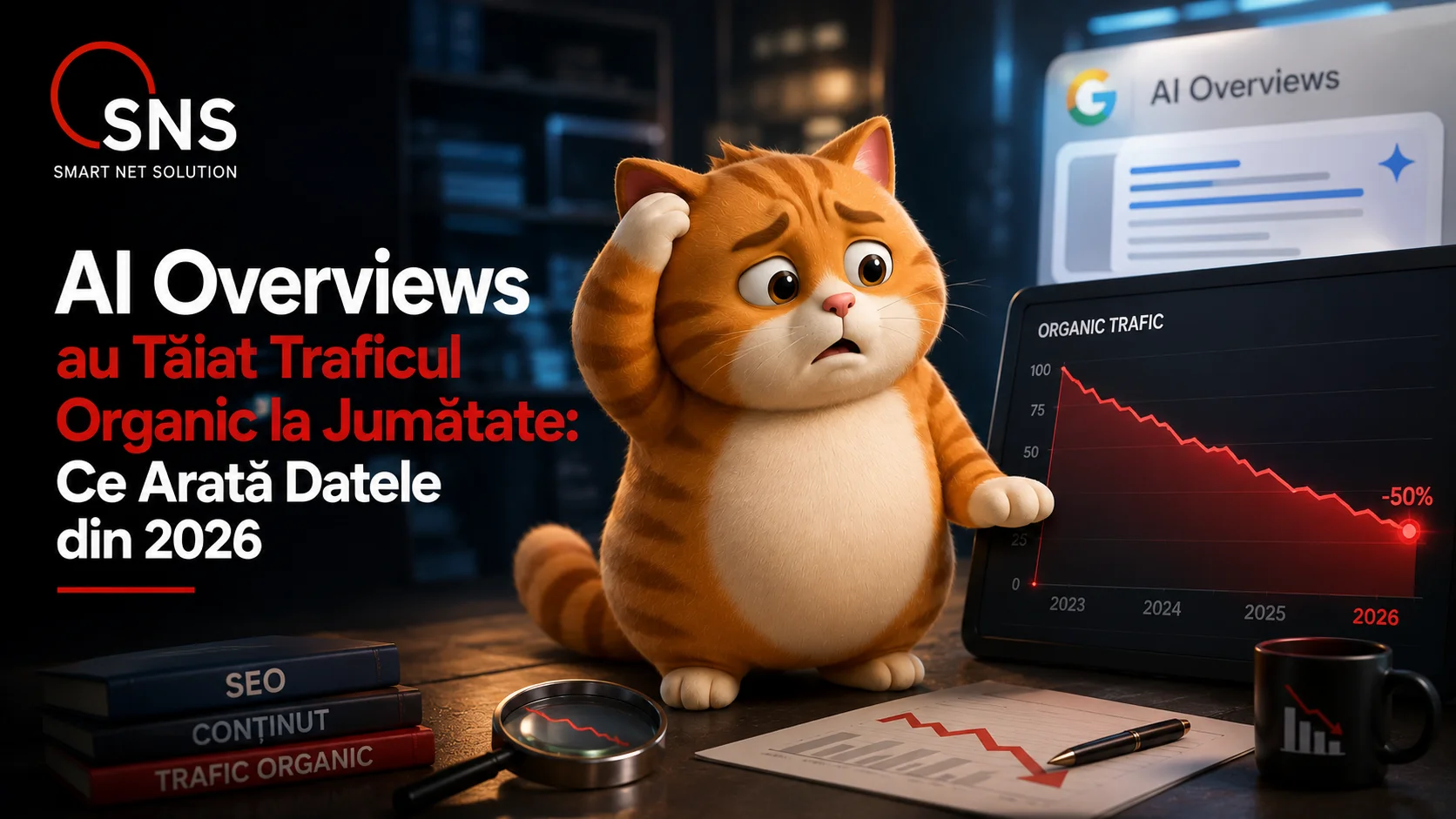
How much organic traffic are you actually losing to AI Overviews in 2026? Real numbers from independent studies and what it means for your business.
We already showed you, in a previous article, how to implement GEO step by step, so you can appear in ChatGPT, Gemini, and Google AI answers. What we haven't put down on paper until now is how big the problem that GEO is trying to solve actually is. Let's put real numbers on it, not impressions.
In the first quarter of 2026, roughly a quarter of all Google searches triggered an AI Overview, the automatically generated summary that appears above the classic results. The figure isn't uniform across all fields: for B2B tech queries, an AI Overview appears in over 80% of searches. For medical queries, the percentage exceeds 85%. In other words, if you sell services or products to other businesses or work in healthcare, almost any relevant search in your niche now goes through an AI summary before the person reaches the classic list of links.
Here are the numbers that matter for your pocket. Several independent studies, using different methods, reach the same conclusion, just with slightly different percentages:
This is the useful part, because it's not a uniform disaster. The analyses show that pages answering simple factual questions ("what is X," "when did Y happen") lose the most traffic, because the AI Overview answers directly and the user no longer has a reason to click.
By contrast, comparison, decision, or case-study content, exactly the kind of "X vs Y" or "how much does Z cost" articles we constantly write on this blog, keeps or even grows its traffic. The reason is simple: an AI summary can answer "what is SEO," but it can't make the decision for you about which platform or agency to choose, so the user still ends up searching for more details from real sources.
A separate analysis across multiple verticals found that, while the share of organic clicks dropped between 11 and 23 percentage points, text ads (Google Ads) gained 7-13 percentage points over the same periods, a clear sign of where attention, and by extension budget, is shifting.
It doesn't mean SEO is dead, however tempting that clickbait headline might be. The fundamentals of SEO, speed, technical structure, authority, quality content, remain just as important as ever, for the simple reason that AI picks its sources from the same pool of well-optimized sites as classic Google. What's changed is the end goal: you're no longer competing just for a spot in the list, you're competing to be the source cited in the automatically generated summary.
Three things, without repeating the entire implementation guide we already wrote:
If you want to see exactly how much traffic you're losing today because of AI Overviews and what you can do about it, let's run an audit.